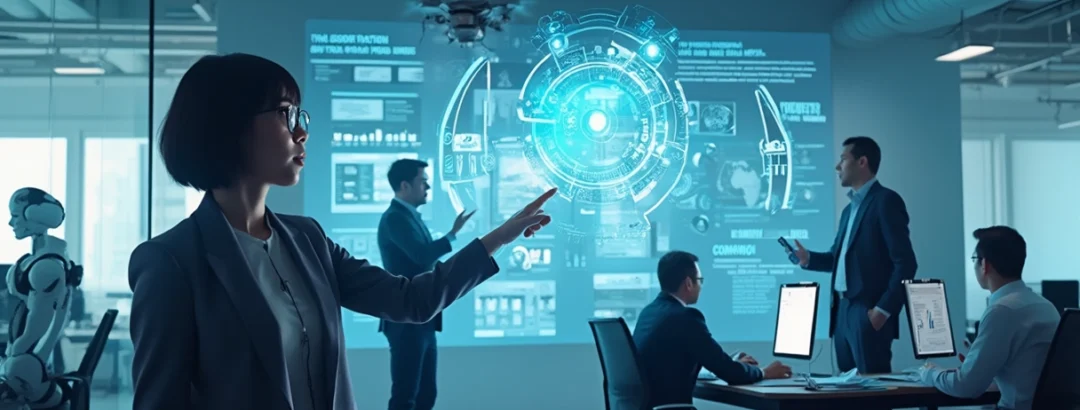
AI vs Intelligent Automation: Key Differences and Business Applications

Artificial Intelligence (AI) and Intelligent Automation are two transformative technologies that are reshaping the business landscape. While often used interchangeably, these concepts have distinct characteristics and applications that set them apart. Understanding the nuances between AI and Intelligent Automation is crucial for businesses looking to leverage these technologies effectively.

Artificial Intelligence: Mimicking Human Intelligence

AI refers to the development of computer systems capable of performing tasks that typically require human intelligence. These systems are designed to simulate human cognitive functions such as learning, problem-solving, and decision-making. AI encompasses a wide range of capabilities, including natural language processing, image recognition, and complex data analysis. Its applications span various industries, from healthcare diagnostics to financial forecasting.

One of the key strengths of AI lies in its ability to recognize patterns and make predictions based on vast amounts of data. This makes it particularly useful in areas like predictive maintenance, fraud detection, and personalized marketing. AI systems can continuously learn and improve their performance over time, adapting to new information and changing environments.

Intelligent Automation: Enhancing Process Efficiency

Intelligent Automation, on the other hand, combines Robotic Process Automation (RPA) with AI tools to automate complex business processes. While RPA focuses on automating repetitive, rule-based tasks, Intelligent Automation takes this a step further by incorporating AI capabilities to handle more complex, judgment-based processes.

This technology excels in streamlining operations that require both automation and intelligent decision-making. For instance, in document processing, Intelligent Automation can not only extract data from various formats but also interpret and categorize information, making informed decisions on how to process each document. This level of sophistication enables businesses to automate entire workflows, from data entry to analysis and reporting.

Key Differences and Applications

The primary distinction between AI and Intelligent Automation lies in their focus and application. AI is broader in scope, aimed at creating systems that can think and learn like humans. It can be applied to a wide range of tasks, from creative endeavors like content generation to complex problem-solving in scientific research.

Intelligent Automation, meanwhile, is more targeted towards improving specific business processes. It combines the efficiency of automation with the decision-making capabilities of AI to enhance operational efficiency. Common applications include automated customer service systems, intelligent document processing, and advanced supply chain management.

Benefits and Challenges

Both technologies offer significant benefits to businesses. AI can provide deep insights from data, enhance decision-making processes, and even create new products or services. Intelligent Automation, on the other hand, directly impacts operational efficiency, reducing errors, speeding up processes, and freeing human workers from repetitive tasks.

However, these technologies also come with challenges. AI systems often require large amounts of high-quality data for training and can struggle with context and nuance in complex situations. Intelligent Automation faces challenges in integrating with existing systems and processes, and may require ongoing maintenance and updates to remain effective.

The Future Landscape

As these technologies continue to evolve, we can expect to see increased integration between AI, Intelligent Automation, and other emerging technologies like the Internet of Things (IoT) and blockchain. This convergence will likely lead to even more sophisticated systems capable of handling increasingly complex tasks and decision-making processes.

Businesses that successfully navigate the distinctions between AI and Intelligent Automation, leveraging each for its strengths, will be well-positioned to thrive in an increasingly digital and automated world. As these technologies mature, they promise to unlock new levels of efficiency, innovation, and competitive advantage across industries.


AI’s Profound Impact on 80% of US Jobs Revealed

The rapid advancement of intelligent automation and artificial intelligence (AI) is reshaping the global job market at an unprecedented pace. As these technologies continue to evolve, they are poised to significantly impact employment across various sectors, prompting both concern and curiosity about the future of work.

A groundbreaking study by OpenAI has shed light on the potential scale of this transformation. The research reveals that approximately 80% of jobs in the United States market will experience a 10% change in their tasks due to generative language technologies. More strikingly, 20% of professions are expected to see a 50% shift in their work responsibilities. These findings underscore the far-reaching implications of AI on the workforce, extending beyond simple task automation to fundamentally altering job roles and required skills.

The American Workplace in Transition

In the United States, the impact of AI on employment is expected to be particularly pronounced. The study suggests that about one-fifth of all professions will undergo significant changes in their core functions. Industries such as writing, copywriting, and content management are likely to feel the effects most acutely, as generative language technologies become more sophisticated and widely adopted. While this doesn’t necessarily mean widespread job losses, it does indicate a need for workers in these fields to adapt and potentially acquire new skills to remain competitive.

Europe Faces Similar Challenges

While specific data for Europe is not directly cited in the studies mentioned, it’s reasonable to assume that the impact will be comparable to that in the United States. The global nature of technological adoption and the interconnectedness of economies suggest that European workers will face similar challenges and opportunities. The European Union is already taking proactive steps to address these impending changes, with a strong emphasis on continuous learning and professional retraining programs to help workers adapt to the evolving job market.

Sectors at the Forefront of Change

Certain sectors are more vulnerable to the disruptive effects of intelligent automation and AI. Jobs involving repetitive tasks or those that can be easily automated are at the highest risk. This includes roles in business process management, accounting, and various administrative functions. However, it’s not just routine jobs that will be affected. Creative professions, including writing and design, are also likely to see significant changes. In these fields, AI may serve more as an assistant than a replacement, augmenting human creativity rather than supplanting it entirely.

Evolution of Job Roles

It’s crucial to understand that the impact of AI on jobs is not a simple matter of replacement. Many roles will evolve rather than disappear completely. For instance, writers may increasingly use AI to generate drafts or optimize content, but human input will remain essential for refinement, personalization, and ensuring the final product aligns with specific goals and nuances that AI might miss. This hybrid approach could lead to increased productivity and allow professionals to focus on higher-value tasks that require uniquely human skills such as emotional intelligence, critical thinking, and creative problem-solving.

The Imperative of Continuous Learning

As the job market undergoes this technological transformation, the importance of continuous learning and professional development cannot be overstated. Investing in ongoing training and reskilling initiatives will be crucial for both employees and employers. Workers must be prepared to adapt to new technologies and acquire skills that complement AI capabilities. Employers, on the other hand, need to foster a culture of learning and provide opportunities for their workforce to evolve alongside technological advancements.

The integration of intelligent automation and AI into the workplace presents both challenges and opportunities. While some jobs may be at risk, new roles are likely to emerge, and existing ones will transform. The key to navigating this change lies in preparation, adaptability, and a commitment to lifelong learning. As we move forward, it’s clear that the most successful professionals will be those who can effectively collaborate with AI technologies, leveraging their capabilities to enhance their own skills and productivity.

Intelligent Automation: Reshaping Jobs and Boosting Human Potential

Intelligent automation is reshaping the global job market at an unprecedented pace. While it’s true that this technological revolution will inevitably lead to the displacement of certain roles, particularly those involving repetitive tasks, it’s equally important to recognize the immense potential for job creation and skill enhancement that comes with it.

In sectors such as manufacturing, accounting, and customer service, we’re already witnessing a significant shift. Tasks that once required human intervention are now being efficiently handled by advanced AI systems. However, this transformation doesn’t signify the end of human involvement in these industries. Instead, it’s ushering in a new era where human skills are being redefined and elevated.

The Emergence of New Opportunities

As traditional roles evolve, we’re seeing a surge in demand for professionals who can develop, manage, and optimize intelligent automation systems. Fields like software development, data analysis, AI system management, and automation consulting are experiencing rapid growth. These sectors not only offer new job opportunities but also require a blend of technical expertise and creative problem-solving skills that are uniquely human.

The IT industry, cybersecurity, artificial intelligence, and machine learning are at the forefront of this job creation wave. These fields are not just expanding; they’re actively seeking individuals who can bring innovative thinking and adaptability to the table. The key to thriving in this new landscape lies in the willingness to continuously learn and evolve.

The Imperative of Skill Enhancement

For individuals navigating this changing job market, the focus must shift towards continuous learning and skill development. The most valuable skills in the age of intelligent automation are those that machines cannot easily replicate. These include creativity, complex problem-solving, emotional intelligence, and advanced social skills.

Adaptability has become more crucial than ever. The ability to quickly learn new technologies, understand complex systems, and apply knowledge across different domains is what will set successful professionals apart. This adaptability isn’t just about technical skills; it’s about cultivating a mindset that embraces change and sees challenges as opportunities for growth.

Bridging the Skills Gap

As we look at the specific skills that will be in high demand, a clear pattern emerges. Technical competencies in programming, data science, machine learning, and artificial intelligence are becoming essential across various industries. However, these hard skills must be balanced with equally important soft skills. Communication, teamwork, time management, and critical thinking are indispensable in roles that require collaboration with both humans and AI systems.

For companies, the challenge lies in effectively managing this transition. Forward-thinking organizations are already investing in comprehensive reskilling and upskilling programs. These initiatives aim to equip employees with the skills needed to work alongside intelligent automation systems, ensuring that human talent evolves in tandem with technological advancements.

The Human-Machine Collaboration

The future workplace will be characterized by seamless collaboration between humans and machines. This synergy will leverage the analytical and processing power of AI while harnessing human creativity, empathy, and strategic thinking. Companies that can effectively create environments where this collaboration thrives will be at the forefront of innovation and productivity.

Success stories are already emerging from companies that have embraced this approach. For instance, a leading automotive manufacturer implemented an intelligent automation system in its production line, which initially raised concerns about job losses. However, by investing in employee training and redeploying workers to more complex roles that involve overseeing and optimizing the automated systems, the company not only increased productivity but also enhanced job satisfaction among its workforce.

As we navigate this transformative era, it’s clear that the impact of intelligent automation on the job market is multifaceted. While certain roles may become obsolete, the opportunities for growth, innovation, and meaningful work are expanding. The key lies in our ability to adapt, learn, and reimagine our roles in a world where human ingenuity and artificial intelligence work hand in hand to create value and drive progress.

AWS CEO Predicts AI Will Transform Developer Roles by 2026

The landscape of software development is on the brink of a profound transformation, according to Matt Garman, the newly appointed CEO of Amazon Web Services (AWS). In a statement that has sent ripples through the tech industry, Garman boldly predicts that within the next two years, developers will no longer be engaged in traditional programming tasks. This provocative vision challenges our conventional understanding of the role of developers and hints at a future where the nature of software creation is fundamentally altered.

At the core of Garman’s perspective is the idea that programming, in its current form, is merely a means of communication with computers rather than an end in itself. He posits that the true value of a developer lies not in their ability to write code, but in their capacity to innovate and craft solutions that address the needs of end users. This shift in focus from syntax to strategy represents a significant departure from the traditional developer paradigm.

As we move towards this new era, Garman suggests that developers will need to evolve their skill sets. The emphasis will be on understanding customer needs and aligning technological solutions with business goals. This customer-centric approach will require developers to wear multiple hats, combining technical acumen with business insight and user experience expertise.

The AI Factor and Job Automation Concerns

Garman’s predictions have inevitably stoked concerns about job automation in the AI era. The prospect of AI systems taking over coding tasks raises questions about the future employability of traditional programmers. However, AWS has been quick to clarify that Garman’s words should not be interpreted as a warning, but rather as a vision of new opportunities in the tech sector.

In a follow-up statement, AWS emphasized their commitment to “removing undifferentiated heavy lifting” from the developer experience. This approach aims to free up developers to focus on more innovative and high-value work. However, the specifics of what these “innovative jobs” might entail remain unclear, leaving room for speculation and, for some, concern.

The Implications for the Workforce

The removal of routine coding tasks through AI and automation will likely lead to a redistribution of resources within the tech industry. While this may result in some roles becoming redundant, it also opens up possibilities for new types of jobs that leverage human creativity and problem-solving skills in conjunction with AI capabilities.

It’s worth noting that Garman’s promotion to CEO of AWS came after a period of significant job cuts within the organization. This context adds weight to his predictions and suggests that the company is actively preparing for a future where traditional development roles may be less prevalent.

A Clear Direction for the Future

Whether Garman’s predictions are viewed as a warning or an exciting glimpse into the future, the direction for the tech industry seems clear. The focus is shifting towards leveraging AI and automation to handle routine coding tasks, freeing up human developers to engage in more strategic, innovative work.

As we stand on the cusp of this new era in software development, it’s crucial for developers, businesses, and educational institutions to prepare for the changes ahead. Adapting to this new paradigm will require a willingness to learn, innovate, and embrace new ways of creating value in the world of technology. The developers of tomorrow may look very different from those of today, but their role in shaping our digital future remains as critical as ever.

RPA and AI: Revolutionizing Business Processes with Intelligent Automation

Robotic Process Automation (RPA) has emerged as a transformative technology in the realm of intelligent automation, revolutionizing how businesses handle repetitive office tasks. By leveraging a combination of APIs and user interface interactions, RPA seamlessly integrates and executes tasks across various enterprise and productivity applications, effectively emulating human processes through autonomous scripts.

At its core, RPA utilizes rule-based software to manage high-volume business process activities, freeing up valuable human resources for more complex and strategic endeavors. This shift not only accelerates digital transformation but also enables CIOs to generate higher returns on investment from their workforce. As the technology evolves, RPA tools are increasingly incorporating AI subdisciplines such as machine learning, natural language processing, and computer vision, moving towards a more comprehensive intelligent automation (IA) approach.

The Synergy between RPA and AI

While RPA is fundamentally process-driven, following predefined workflows, AI is data-driven, using machine learning to recognize patterns and adapt over time. This distinction creates a powerful synergy: AI enhances RPA’s capabilities to automate more complex tasks, while RPA provides a framework for swiftly implementing AI-derived insights. This complementary relationship is driving the next wave of automation in enterprises across various sectors.

The core capabilities of RPA software typically include low-code environments for building automation scripts, seamless integration with enterprise applications, and robust orchestration and administration features. One of RPA’s key strengths lies in its ability to access information through legacy systems and integrate with other applications via front-end interfaces, making it a versatile tool for modernizing operations without overhauling existing infrastructure.

Benefits and Challenges of RPA Implementation

Organizations implementing RPA can expect numerous benefits, including reduced coding requirements, rapid cost savings, improved customer satisfaction, enhanced employee morale, increased accuracy, and better compliance. Moreover, RPA allows businesses to achieve these improvements while maintaining their existing systems, minimizing disruption and investment in new infrastructure.

However, RPA adoption is not without its challenges. Many organizations struggle with adapting their corporate culture to embrace automation. Additionally, scaling RPA programs has proven difficult, with 52% of customers reporting challenges in expanding their initiatives. Overcoming these hurdles requires a strategic approach to implementation and a commitment to organizational change management.

RPA Across Industries

The impact of RPA is being felt across various industries, with banking and financial services leading the charge, accounting for 36% of all use cases. Major banks are leveraging RPA to streamline customer research, account opening processes, and anti-money laundering procedures. In the insurance sector, RPA is transforming claims processing, regulatory compliance, policy management, and underwriting tasks.

Retail businesses are applying RPA to enhance customer relationship management, optimize warehouse and order management, and bolster fraud detection efforts. In healthcare, RPA is proving invaluable for information management, prescription management, and insurance claim processing, significantly reducing administrative burdens and improving patient care.

The Future of RPA

As the RPA market continues to expand, with Forrester projecting growth to USD 12 billion by 2023, organizations are setting ambitious goals for their automation programs. To be considered as having an advanced RPA program, companies are now expected to have 100 or more active working robots. This benchmark underscores the rapid adoption and scaling of RPA across industries.

The future of RPA lies in its continued integration with AI technologies, pushing the boundaries of what can be automated and optimized. As businesses strive for greater efficiency and competitiveness, the synergy between RPA and AI will play a crucial role in shaping the landscape of intelligent automation, driving innovation and transforming operations across the global economy.